Search

Sail on Sail Pending

Now it's your turn to Sail on Sail Pending!!

Category

Travel

Aldelberto

Adalberto was one of the first people we met when we arrived, because as soon as we cleared custom we went to the marina restaurant to get something to eat.

Aldalberto was our server at the government operated restaurant above the marina and I think we may have been his only customers all day. Aldalberto allowed us to pay for our meal in USD since it was too late to get into the city to exchange our money into Cuban Currency.

Aldalberto was so happy to serve us and kept asking if we needed anything and if everything was alright. I had a plate of grilled shrimp in a lite garlic sauce over rice, Rich had a skirt steak, and Tyler had pork. All plates were served with a fresh green salad and Aldelberto gave us another plate that was toppling over with extra rice. After the long crossing the cold beer tasted amazing and Rich and I each had 3!! Tyler has 2 of Cuba’s versions of Sprite. Our entire bill came to $30 USD, so we gave Aldelberto $35.00 USD and told him to keep the change. He was ecstatic!!! He gave us his telephone number and address and told us we must come visit him and meet his family. We explained to Aldelberto that we were very tired from the crossing and told him we couldn’t make any plans right then. We asked him when he worked next and that we would come back to plan a visit. He told us that he worked the next day so we asked if he could make us Mojito’s and he said yes, that his brot
her grows mint in his garden at home and he would bring a bunch to make us Mojito’s the next day. As we left he shook our hands and then hugged each of us, so happy that we arranged a return visit. He said he could not wait to see us the next day.

Note: At this point we were in the country for a little over an hour. It seemed very odd to us that Aldelberto would invite us back to his home…. but now, as I write this 48 hours later we are realizing that this is normal Cuban culture. The people of Cuba are as intrigued with the outside world as we are of them and their country.

—-
Sorry for the low resolution pictures.
This Blog was posted via our IridiumGo!

To follow along on our journey subscribe to our YouTube channel:

http://www.YouTube.com/user/SailonSailPending

All videos from Cuba will be uploaded as soon as we have access to wifi.

Contact us at: Sail.SailPending@gmail.com
Dining Options in Cuba

Dining Options in Cuba

There are a couple different types of dining options in Cuba.

1.) The Government Restaurants: These are easy to find and where most tourist will go. They are just like any nice restaurant in the United States or throughout the world and usually have a vast menu of items to satisfy anyone’s palette. The table are covered with beautiful tablecloths and will have matching plates and cutlery. The service will be top notch. The prices at these are in CUC’s

2.) Private Paladars: These small restaurants are located in a private home. Some are government approved others are not. They are a little harder to find and usually you have to ask a local to take you to one or sometimes a local will approach you and ask if you are looking for something to eat.

The private paladars will only offer locally sourced food and may only have one or two specialties on the menus. Sometimes the person taking your order is also the one cooking your food. So, patience is key here, but it will not go unrewarded. The food is served with love and is usually as fresh as you could possibly get!! The prices listed at these are usually in CUP’s, but can be in CUC’s at the government approved establishments.

3.) Food Kiosk’s and Street Vendors: These can be found anywhere there are people gathering, such as a busy street or ferry dock. They will serve anything from fresh fruits, to warm roasted peanuts, pork sandwiches, to a whole roasted pig. The prices listed at these are usually CUP’s

We have tried to eat mostly at private paladars and the food has been amazing!!! We have only been here 3 full days and have eaten the local Shrimp, Lobster, Calamari, Octopus, Red Snapper and have been impressed by every meal.

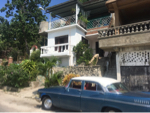
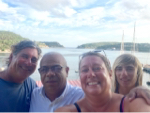
The picture is of the first paladar that we visited just outside of Santiago de Cuba. It was located on the 2 and third floor of the home, with spectacular views overlooking the bay.

Santiago de Cuba

Santiago de Cuba

Christoper Columbus has been quoted saying that Cuba was the most beautiful islands that he ever sailed into!

This is one of the main reasons we are so excited to visit and explore. But, as American’s we are also allured to and are excited to explore something that is “off limits” to the typical American tourist.

As we sailed along the Southern Coast of Cuba, we are probably experiencing about the same view that Columbus had in the 15th century. There is nothing, not a house, not a resort, not a road….All we have seen are lush green mountains that extend from the sea up into the clouds.

Santiago de Cuba is the first stop on our adventures through Cuba. The city is located on the South Eastern side of the island and features a protected bay that is connected to the Caribbean Sea. This allows for a major sea port and probably why it is the second largest city in Cuba with a population of over 1,000,000 people.

The majestic Castillo del Morro overlooks the harbor entrance and reminded us of the entrance into San Juan, Puerto Rico. Once you enter through the narrow entrance the bay opens up. As we navigated to the marina we dodged local fishermen who were not fishing from boats but from home made personal floats that looked like they were made from truck or tractor tire tubes. They all smiled and waved as we passed by.

The city was established by the Spanish in the year 1515, but has been plundered by French and British forces throughout the years, so the city is rich with Spanish, French, and African cultures. Santiago de Cuba is known for its music and traditional dances. It is where the Salsa (the dance, not the sauce) originated.

We took a taxi into the city to exchange money and on our drive in, I just kept thinking that I felt like I was in an old movie that was reproduced in color. Donkey’s pulling carts of fruits and veggies are sharing the road with 1957 Chevys and old motorcycle with side cars.

Another thing that made us feel like we were in a movie was that everything was perfect! The grass on the side of the road manicured, there was not any site of garbage along the road or in the streets, and we never saw a homeless person or anyone begging for money. This is extremely rare for a Caribbean Island and was a pleasant change that we were not expecting. It’s not that we only stayed in the “touristy” areas either, we walked and ventured outside the zone, as we always do. 🙂

The people of Cuba are so amazing and so welcoming of us, into their country, that I am going to start to write not only about the spots we visit, but also about the people we have met.

Santiago de Cuba

Santiago de Cuba

Christoper Columbus has been quoted saying that Cuba was the most beautiful islands that he ever sailed into!

This is one of the main reasons we are so excited to visit and explore. But, as American’s we are also allured to and are excited to explore something that is “off limits” to the typical American tourist.

As we sailed along the Southern Coast of Cuba, we are probably experiencing about the same view that Columbus had in the 15th century. There is nothing, not a house, not a resort, not a road….All we have seen are lush green mountains that extend from the sea up into the clouds.

Santiago de Cuba is the first stop on our adventures through Cuba. The city is located on the South Eastern side of the island and features a protected bay that is connected to the Caribbean Sea. This allows for a major sea port and probably why it is the second largest city in Cuba with a population of over 1,000,000 people.

The majestic Castillo del Morro overlooks the harbor entrance and reminded us of the entrance into San Juan, Puerto Rico. Once you enter through the narrow entrance the bay opens up. As we navigated to the marina we dodged local fishermen who were not fishing from boats but from home made personal floats that looked like they were made from truck or tractor tire tubes. They all smiled and waved as we passed by.

The city was established by the Spanish in the year 1515, but has been plundered by French and British forces throughout the years, so the city is rich with Spanish, French, and African cultures. Santiago de Cuba is known for its music and traditional dances. It is where the Salsa (the dance, not the sauce) originated.

We took a taxi into the city to exchange money and on our drive in, I just kept thinking that I felt like I was in an old movie that was reproduced in color. Donkey’s pulling carts of fruits and veggies are sharing the road with 1957 Chevys and old motorcycle with side cars.

Another thing that made us feel like we were in a movie was that everything was perfect! The grass on the side of the road manicured, there was not any site of garbage along the road or in the streets, and we never saw a homeless person or anyone begging for money. This is extremely rare for a Caribbean Island and was a pleasant change that we were not expecting. It’s not that we only stayed in the “touristy” areas either, we walked and ventured outside the zone, as we always do. 🙂

The people of Cuba are so amazing and so welcoming of us, into their country, that I am going to start to write not only about the spots we visit, but also about the people we have met.

Cuban Currency

Cuban Currency

We have been planning our trip to Cuba for over 7 months now.

Any credit cards, debit cards and/or ATM cards that are issued in the United States are worthless and will not work in Cuba, so we had to make sure we enough cash on board to cover absolutely any expense that we may have for the next 2 months while we are there.

To exchange any currency in Cuba there is an automatic 3% fee. In addition, there is a 10% penalty for exchanging USD’s into Cuban Peso’s. So, $100 USD will only get us about 87 Cuban Peso’s.

I hate penalties and loosing money, so we stocked up on Euro’s when we were in Martinique. We will not encounter the 10% penalty when exchanging Euro’s.

There are 2 different types of currency in Cuba.

CUC, (also known as the Peso Convertible)
1.) The currency used by tourist
2.) Has Pictures of statues
3.) Feels more official

CUP
1.) The currency used by the locals.
2.) Has pictures of people
3.) Its usually more worn

The CUC is = to $1 USD
1 CUC is = to 25 CUP

Ok, are you confused yet?

We CAN convert our CUC to CUP to use for taxi rides, groceries or really anything local. But we can not exchange Euro’s or USD for CUP.

The best part about this whole currency thing is (sarcastic voice) …. most places don’t say whether the listed prices are CUC or CUP!!

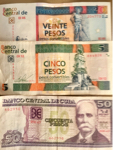
Here’s a picture of the currency.

The 50 is really only worth $2.00 USD since it is a CUP.

The 20 is worth $20 USD and the 5 is worth $5 USD since they are CUC’s….

This should be fun to try to figure out!!

Clearing into Cuba

Entering the Country
Customs and Immigrations

Clearing into Cuba…

This has been one of the easiest, but also the most thorough countries that we have checked into so far. Everything was very organized and efficient, the officials were professional and no “tips” were asked for…. I did have a bowl of Hershey Kisses on the table that they enjoyed though. 😉

The initial procedure for arriving into Cuba from a from a foreign port is:

1.) Fly a Yellow quarantine flag from your starboard spreader when entering Cuban waters.

2.) Make sure your VHF is set on the International frequencies and not US.

3.) When you are 12 miles from the harbor entrance make your initial call on VHF channel 16 to Guarda Frontera, which is the Custom and Border Patrol,

Also, Even if you speak fluent Spanish make the call in English.

Be prepared to answer the following questions:

a.) Name of Vessel, including being able to spell it phonetically properly. A-Alpha, B-Bravo, etc

b.) The Flag of the vessel

c.) Number of persons on board and their Nationality

d.) Last Port of Call

Note: Don’t expect any response on your initial call 12 miles out, because we noticed that most the Customs and Immigration official carried a hand held radio. They will hear you, but you will be too far away to hear them. We just kept trying every few miles until we reach them.

When you do reach them:

4.) Be ready to listen and copy instructions of where to go and what to do. If you are not sure what they said ask them to repeat it. Make sure to repeat back the instructions they gave you to make sure you understood them correctly.

We were asked to anchor just outside of the marina. As soon as we anchored a doctor and guarda came aboard. The first thing the doctor did was take our temperature and asked us about our general health and immunizations.

The guarda looked over our boat papers, passports the departure clearance from the Turks and Caicos.

They asked us questions in English and filled all of the paperwork out for us and had us sign where required. Once they decided we were healthy we docked the boat at the marina and they both got off. The guarda took our passports for review and asked us to stay on the boat for 30 minutes and then come to his office to retrieve them.

After 30 minutes we walked down the dock to his office. He asked us a few more questions and went over a few rules about high definition cameras and drones.

The Marina manager came into the office and the guarda gave him our passports so he could issue our 30 day visas. We were asked to wait back on the boat, because the next step is that our boat would be inspected.

2 guarda officials came onto the boat and we showed them around. They were very polite and respectful.

All in all, it took about one hour to check into Cuba and it was very organized, professional, and respectful. This was the 14th (or 15th, I am starting to loose track) country we have check into, Cuba has been our best experience. ….. Well, maybe the French Islands are a little quicker because you self check in at a computer, but until you learn that French keypad it’s not easier.

Cuba is INSANE!!!

We’ve only been here 4 and 1/2 hours and we have invitations to eat dinner with 2 different family’s in their homes….

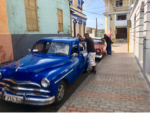
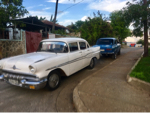
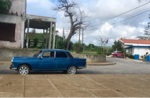
I think there is a US tv show that shows a person from Cuba saying, “You American’s call it a car show and we call it a parking lot.” …. this is not a joke folks!!! These pictures are just on one street a block from our marina.

Tomorrow we have a taxi picking us up to take us into the city to get some Cuban currency.

I think we are going to have an amazing time exploring this country!!!

Passage to Cuba; Notes

Passage Notes:
Great Inagua, Bahamas to Santiago de Cuba, Cuba

This is for our friends who are on kinda the same route as we just did.

The winds started out as forecasted Easterly in the mid to high 20’s with quartering seas on the bow of about about 1.3 to 1.5 meters. The ride was fun and we were making good time.

The Windward Passage was very busy with a constant flow of shipping traffic through the marked channel. We had to keep a good watch because there were many trees and other large debris floating in the water that we had to steer around. We even saw a small home made boat, with hand made sails that had about 10 people on it, floating by. With all the obstacles I am glad we did this part during daylight hours.

The forecast was for the winds to decrease and swing around from the South as we rounded the South Eastern tip of Cuba and made our turn to the West. At this point the winds completely died and we had to turn a motor on.

We encountered a major counter current of 1.5 to 2.5 knots for the entire 110 miles of the Southern coast of Cuba and could barely keep 4 knots SOG. This current did not seem to be dependent on tides and remained with us along the entire Southern coast; even when we were 12 miles off the coast passing by Guantanamo Bay. We anticipated a counter current and planned for only 5 knots along this stretch (22 hours), but it actually took us over 28 hours. Luckily, we originally thought we would arrive around 9-10am and not later in the afternoon because this extra time could have caused us a second night of sailing. So, others coming this way, plan accordingly.

The crossing from Great Inagua to Santiago de Cuba took us about 33 hours total. Now, it’s time to get checked into the country.

Getting Permission to Sail a US Registed Vessel to Cuba

Getting Permission to Sail a US Registered Vessel to Cuba!!

Let me tell ya….It’s not as easy as jumping on an airplane and landing in Havana!!

Blog at WordPress.com.

Up ↑